Circa the Spring of 2023 (yeah, I forgot to write up this article for a while) I popped into a garage sale while I was driving through midtown Reno. The garage sale was a multi-house garage sale on a weird lot close to a old recording studio. The lot was deeply overgrown with lots of unmanaged bushes, untrimmed elm trees, and landscaping that hadn't been touched probably since before I was born.
The 3 houses on the lot were beat up and looked older than everything around; which is basically 1930's construction for that neighborhood. Nothing to raise a brow about but also made me kind of "huh" about it. The garage sale didn't have anything particularly interesting (Reno has great garage sales), but when I went inside of the house I was shocked to see wood walls made from 2ft to 3ft wide rough cut timber.
For those of you who aren't familiar a (3) ft x (10) ft (1) inch old growth ponderosa board would probably go for $400 (if you could find it)... and every wall in the house was made from them. Furthermore, you could still see the marks from the circular saw on the board, which means they were OLD. REALLY OLD.
...You don't see something like that everyday.
So I asked the guy running the garage sale... whats the deal with this house?
He explained to me that the three houses on the lot were all moved from Virginia City for their historical significance, and that the house I was standing in was, at that time, the oldest house in Nevada. It was built in the mid-late 1800 (I can't remember the specific year but he knew it, lets call it 1870 in case someone runs into this article).
The houses and the lot had actually just been sold to put up a handful of town homes, and were scheduled to be demolished. The historical society was working on trying to save the house and get it moved again (the other two houses were just going to be demolished either way).
I was shocked to hear that the oldest house in Nevada was going to be demolished to throw up some trash townhomes.
Reasonably speaking, there was nothing I could about the house, I didn't have the money for a lift and I don't think it would fit on my lot even if I wanted to do... no telling how much lead paint, asbestos, etc there was either (I had young kids). So the best I could do is hope that someone with more resources would solve the problem. (note: I did later try to work with the crew to reclaim some lumber, the scrapers bailed on me... which I'm pretty angry about still)
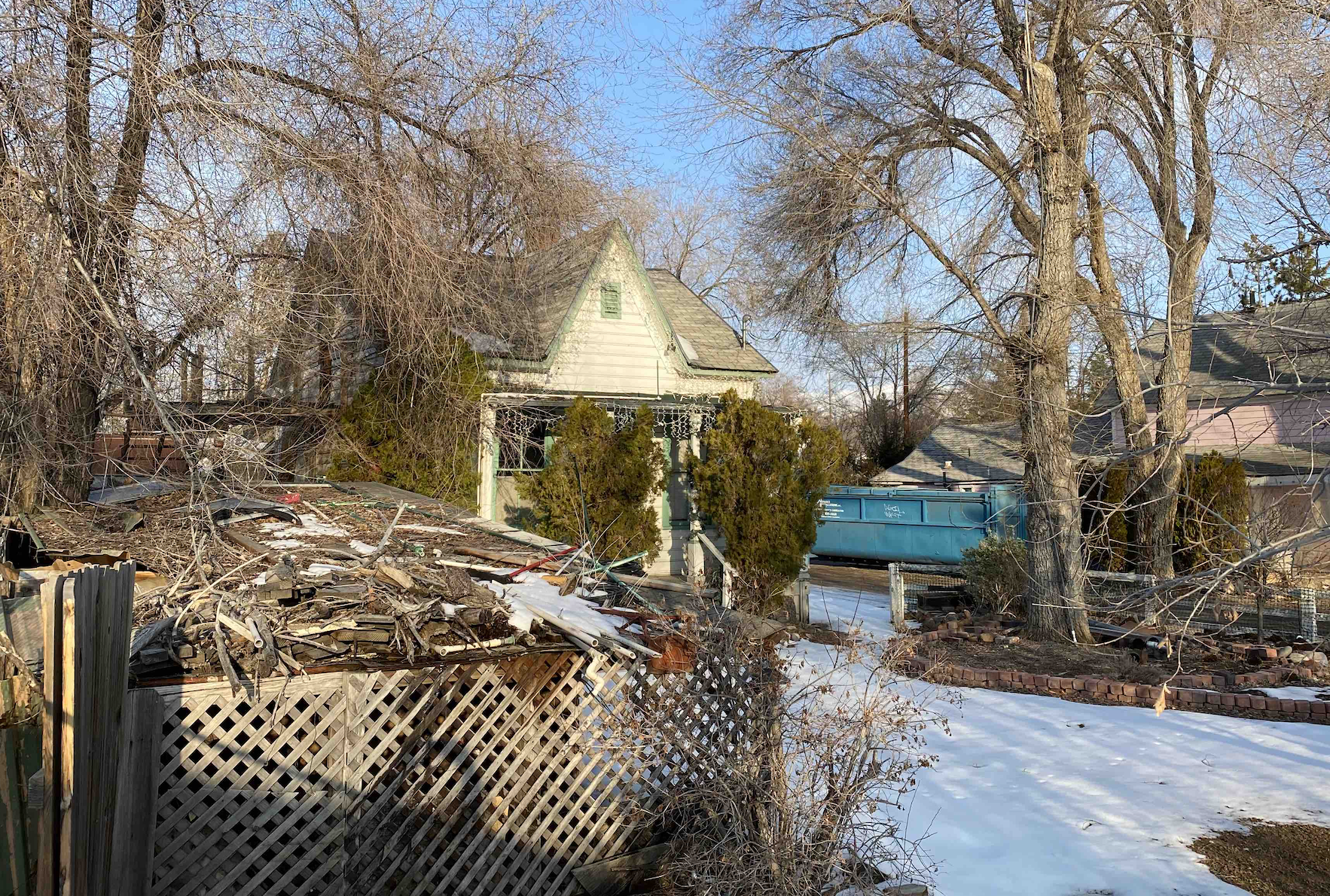
A month or two later, the bulldozers came by and put the houses into a handful of dumpsters in a day or two. I mourned the building a little bit at first, but I gradually I changed my mind.
Reflecting on the event, 1870 seems really old at first but by European standards its a spring chicken. My house in Philadelphia was built in 1899... a mere 30 years after "the oldest house in Nevada" and the houses in Society Hill are early 1600s.
Why was I so upset about this particular house?
It occurred to me that not everything should be considered beautiful, historic, interesting just because it is old. That house wasn't particularly nice by the standards of the time. By the standards of 2023 it was actually pretty crapy. The materials would be exceptional by today's standards, but thats actually just what they had to work with at the time. I couldn't fathom sleeping in that drafty house during a Nevada winter.
So what was I upset about? It wasn't the house. I was upset, like many people are, by the idea of destroying valuable things from the past for the sake of having something new. Our society does a poor job of honoring our past. We are terrible at maintaining things or finding creative ways to reimagine the old into the new (as an example just check out any remodeling forum with people trying to figure out how to mount 1000 inch tvs in a house built before there was TV).
...but as bad as we are at caring for our heritage, the "other side of the sword" might be worse at dealing with the past. That is letting things die that should die.